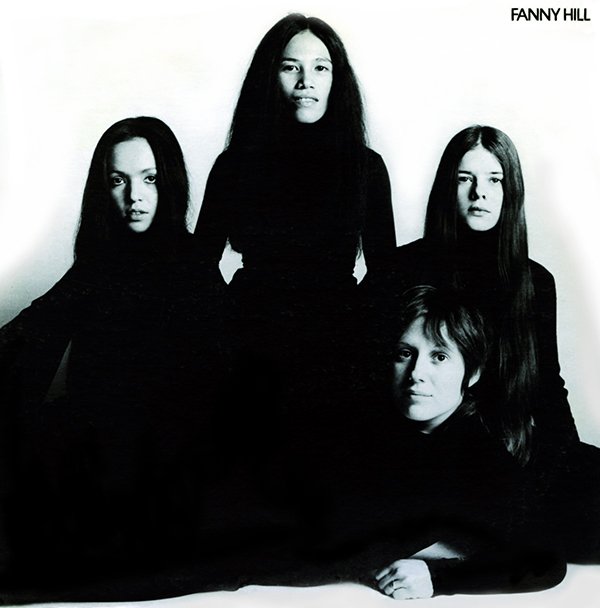
Fanny Hill, the 1972 third studio album by the pioneering all-female rock quartet Fanny, captures the band at its creative peak. Recorded over two weeks at London’s Apple Studios with producer Richard Perry and Beatles engineer Geoff Emerick, it arrives at a moment when the group—guitarist June Millington, bassist Jean Millington, keyboardist Nickey Barclay, and drummer Alice de Buhr—had already proven women could rock as hard as anyone. The album’s cheeky title, borrowed from the infamous 18th-century erotic novel, signals both confidence and irreverence. Clocking in at a brisk 41 minutes, Fanny Hill blends sharp originals with two inspired covers, delivered with muscular grooves, rich harmonies, and a loose, live-in-the-room energy that still feels vital.
The record opens with a smoldering, Latin-tinged take on Marvin Gaye’s “Ain’t That Peculiar,” June Millington’s slide guitar slicing through the rhythm like a hot knife. It sets the tone for an album that refuses to be boxed in. “Blind Alley” and “Borrowed Time” swagger with Rolling Stones-style brass (courtesy of Bobby Keys and Jim Price), while the Beatles cover “Hey Bulldog” gets a snarling, gender-flipped overhaul. Yet the band’s own material shines brightest: Jean Millington’s dreamy “Wonderful Feeling,” June’s tender “You’ve Got a Home,” and Nickey Barclay’s piano-driven closer “The First Time” reveal a sophisticated songwriting range that balances raw power with emotional nuance. The rhythm section—Jean’s thunderous bass and Alice’s precise drumming—anchors everything without ever sounding polite.
Critics at the time noted the group’s “pure exuberance,” and it’s easy to hear why. Fanny Hill isn’t flawless; a couple of mid-tempo tracks drift rather than ignite. But the playing is consistently exhilarating, the vocals soar, and the production captures a band that sounds like it’s having the time of its life. In an era when major-label rock was still a boys’ club, Fanny Hill stands as both a commercial statement (peaking at No. 135 on Billboard) and an artistic triumph. It remains the group’s strongest and most exciting work, a landmark that deserves far more than footnote status in rock history. Any fan of ’70s rock who values skill, swagger, and trailblazing spirit should spin this one loud.