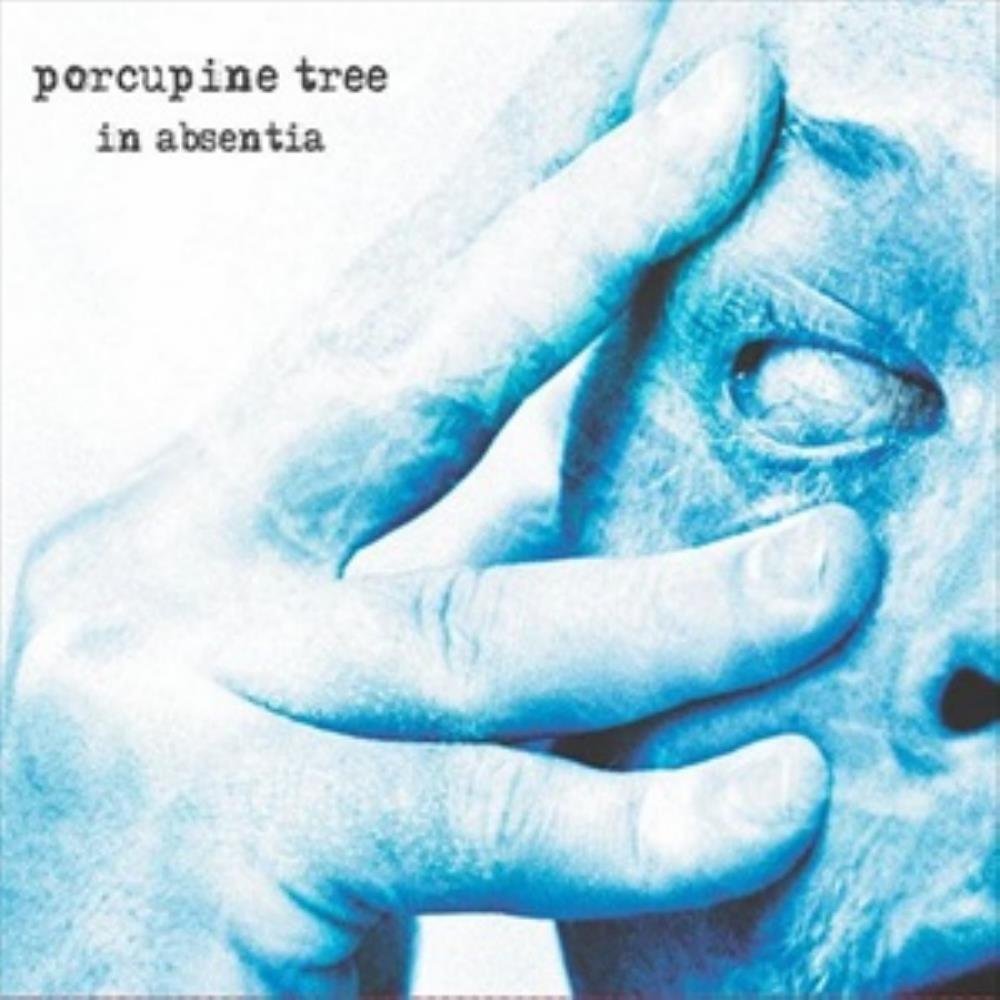
In Absentia (2002) stands as Porcupine Tree’s definitive pivot from cult psychedelic prog into the mainstream of heavy, cinematic rock. Steven Wilson’s songwriting had already sharpened on the preceding Lightbulb Sun, but here he weaponizes it: seven-minute epics sit beside taut radio singles, acoustic fragility collides with crushing riffs, and the result feels both expansive and ruthlessly focused. Produced by Wilson with the band’s new rhythm section—Colin Edwin on bass and the then-newly recruited Gavin Harrison on drums—the album sounds like a prog-rock band discovering distortion pedals and modern studio clarity at the exact same moment.
The opening triad is mercilessly efficient. “Blackest Eyes” kicks the door in with a staccato riff and Wilson’s most direct vocal in years, while “Trains” rides one of rock’s great acoustic-to-electric builds: a gentle fingerpicked lament that detonates into a wall of layered guitars and Harrison’s metronomic precision. By the time “The Creator Has a Mastertape” arrives, the band is operating at full swagger—prog time-signature shifts married to a sleazy, almost Queensrÿche-style groove. These three tracks alone would have been enough to announce a rebirth; the rest of the record simply deepens the statement.
Where In Absentia truly excels is its psychological darkness. “Wedding Nails” and “Strip the Soul” slither through dissonant chords and buried screams; “Heartattack in a Layby” is a claustrophobic miniature built on reversed guitars and Wilson’s whispered paranoia. Even the gentler “Prodigal” and “.3” carry an undertow of melancholy that never quite resolves. Richard Barbieri’s keyboards, long the band’s textural secret weapon, are more restrained than on earlier records but perfectly placed—subtle washes of Mellotron and analog synth that glue the heavier sections together without ever softening the edge.
Critics at the time called it “prog metal,” but that label undersells the album’s emotional range. In Absentia is less about technical flash than about mood and dynamics: the way a whisper can feel heavier than a power chord. Twenty-four years later it still sounds urgent, modern, and strangely intimate. For many fans it remains Porcupine Tree’s peak—the moment their cult following became something bigger without sacrificing the strangeness that made them special. If you only own one Porcupine Tree record, this is the one that best explains why the band matters.