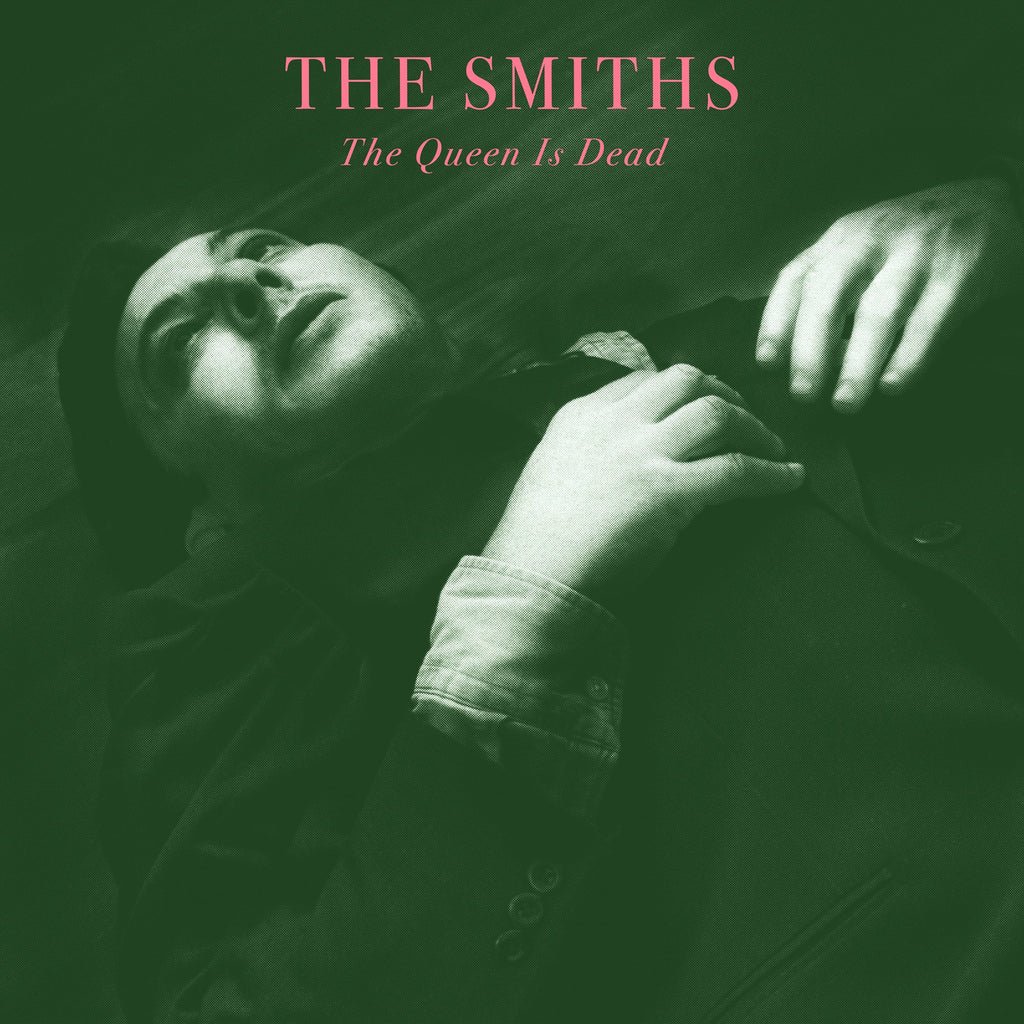
The Queen Is Dead, released in June 1986, is The Smiths at their absolute peak. It is the album where Morrissey’s lacerating wit and Johnny Marr’s incandescent guitar playing finally fused into something mythic. Clocking in at just under forty minutes, it feels both compact and epic, a perfect distillation of the band’s brief, combustible career.
The record opens with its title track, a six-minute roar built on a sampled brass-band snippet from an old British film. Morrissey’s voice drips contempt for the monarchy, the church, and the entire English establishment while Marr’s guitar slashes across the rhythm section like a switchblade. It is funny, furious, and strangely danceable. From there the album never lets up. “Frankly, Mr. Shankly” turns the music-industry grind into a music-hall farce, complete with slide guitar and Joyce’s military-precision drums. “I Know It’s Over” is the emotional core: a slow, crushing ballad in which Morrissey sings like a man already buried, yet Marr’s melody somehow lifts the despair into something almost transcendent.
The singles are flawless. “Bigmouth Strikes Again” is pure adrenaline, Marr’s riff ricocheting off Rourke’s rubbery bass line while Morrissey cheerfully imagines himself as a Joan of Arc figure on the pyre. “There Is a Light That Never Goes Out” remains one of pop music’s greatest odes to romantic fatalism; the couplet about a ten-ton truck has been quoted in more bedrooms than any lyric since the 1960s. Even the gentler “Cemetry Gates” (deliberately misspelled) sparkles with literary name-dropping and dry humor, proving Morrissey could be playful without losing his edge.
What makes The Queen Is Dead endure is its emotional range. One moment it’s savage satire, the next it’s naked vulnerability. The production—raw yet crystalline—captures every detail: the jangle of Marr’s Rickenbacker, the sigh in Morrissey’s voice, the snap of Joyce’s snare. Forty years later it still sounds urgent, still makes listeners feel simultaneously smarter and more heartbroken than they were before they pressed play. If you only own one Smiths album, this is the one. It is not just their masterpiece; it is one of the finest British records of the twentieth century.