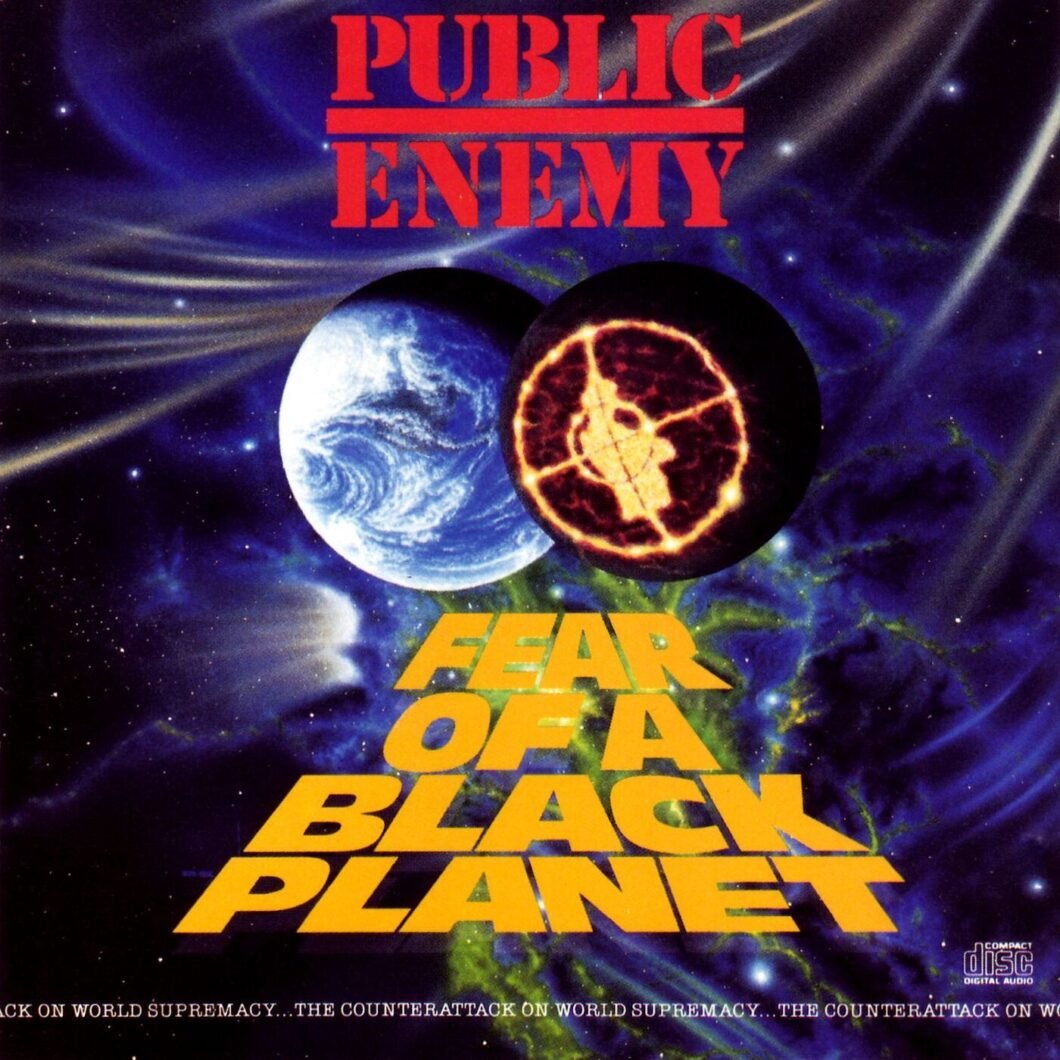
Public Enemy‘s Fear of a Black Planet, released on April 10, 1990, stands as a seismic force in hip-hop history, a defiant manifesto against systemic racism and cultural erasure. As their third studio album, it builds on the revolutionary blueprint of It Takes a Nation of Millions to Hold Us Back, but amplifies the chaos with The Bomb Squad‘s masterful production. Layers of samples—from funk legends like James Brown to rock riffs and news clips—create a sonic collage that’s dense, urgent, and unapologetically black. Chuck D‘s baritone thunder roars over the mix, delivering lyrics that dissect America’s racial hypocrisies with surgical precision.
The album opens with “Contract on the World Love Jam,” a swirling intro of media snippets setting the stage for confrontation. Tracks like “Brothers Gonna Work It Out” pulse with empowerment anthems, urging unity amid division. “Fight the Power,” immortalized in Spike Lee‘s Do the Right Thing, is the crown jewel—a battle cry against oppression that still resonates in protests today. Its infectious hook and relentless beat demand action, blending fury with funk. “911 Is a Joke,” led by Flavor Flav‘s manic energy, skewers emergency services’ neglect of black communities, while “Welcome to the Terrordome” addresses antisemitism controversies surrounding the group, turning backlash into bold self-defense.
Thematically, Fear of a Black Planet tackles interracial relationships (“Pollywanacracka,” “Fear of a Black Planet”), media manipulation, and white fear of black progress. It’s humorous yet harrowing, blending satire with scholarship—Chuck D name-drops historical figures and critiques colorism in “Burn Hollywood Burn.” At 20 tracks, it occasionally feels sprawling, but the cohesion lies in its relentless rhythm and message: black identity as a threat to the status quo.
Almost thirty-six years on, its influence echoes in artists like Kendrick Lamar and modern activism. For hip-hop heads, it’s essential listening; for newcomers, a gateway to conscious rap’s power. Public Enemy didn’t just make music—they ignited revolutions. In a world still grappling with these issues, this album remains a blueprint for resistance.